Whimsical 3D Render of a Stylized Succulent: Bridging Nature and Digital Art
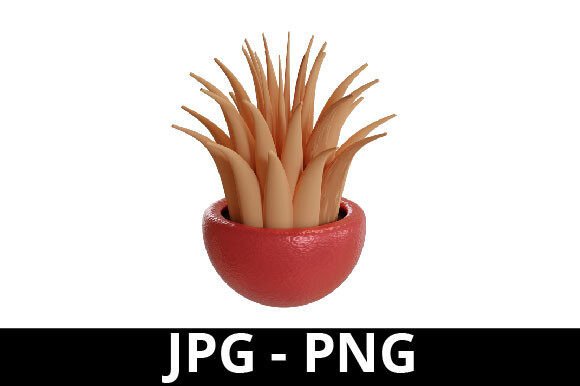
In the rapidly evolving landscape of visual communication, the intersection of organic forms and digital precision has given rise to a captivating aesthetic trend. At the forefront of this movement is the Whimsical 3D Render of a Stylized Succulent, a visual motif that has transcended its origins in niche digital art circles to become a staple in modern branding, interior design, and lifestyle content. This specific imagery, often featuring a stylized succulent plant nestled in a vibrant red pot, represents more than just a pretty picture; it is a sophisticated blend of modern design principles with the timeless appeal of natural elements.
The allure of these images lies in their ability to balance the geometric perfection of computer-generated imagery (CGI) with the soft, unpredictable curves of botanical life. Unlike traditional photography, which captures reality as it is, or flat vector illustrations, which simplify reality into two dimensions, 3D rendering allows for a unique manipulation of light, texture, and form. When applied to a subject as universally recognized as a succulent, the result is an image that feels both familiar and entirely new, inviting viewers to explore the space between the real world and the realm of imagination.
The Anatomy of Visual Appeal: Texture, Color, and Form
To understand why the Whimsical 3D Render of a Stylized Succulent resonates so deeply with audiences, one must dissect the technical and artistic choices that define it. The core of this aesthetic is the interplay between contrasting textures. In a typical render, the succulent leaves might possess a smooth, almost ceramic-like finish, lacking the microscopic imperfections of a real plant but gaining a sense of idealized purity. This smoothness is often juxtaposed against the matte or slightly textured surface of the container, such as the aforementioned vibrant red pot.
Color theory plays a pivotal role in elevating these renders from simple graphics to compelling visual statements. The choice of a vibrant red pot serves as a powerful anchor. Red is a color associated with energy, passion, and attention, creating an immediate focal point. When paired with the cool, calming greens of the succulent, the contrast creates a dynamic tension that draws the eye. This use of complementary colors ensures that the image remains striking even at small sizes, making it highly effective for social media thumbnails, app icons, and mobile wallpapers.
Furthermore, the "stylized" aspect of the render introduces a layer of abstraction. Artists often exaggerate the proportions of the succulent, perhaps making the leaves plumper or the rosette pattern more symmetrical than nature would allow. This approach leans into the concept of the "urban jungle," where plants are curated and perfected rather than wild and untamed. The resulting image is not a scientific illustration but an emotional one, evoking feelings of mindfulness, zen, and controlled growth. It suggests a version of nature that is accessible, manageable, and aesthetically pleasing within a contemporary home or office environment.
Lighting and Atmosphere in Digital Sculpture
A critical component that separates high-quality 3D renders from amateur attempts is the treatment of lighting. In the context of a whimsical succulent render, lighting is rarely realistic in a documentary sense. Instead, it is atmospheric and mood-driven. Soft, diffused global illumination is often used to eliminate harsh shadows, giving the scene a dreamlike quality. This technique enhances the "whimsical" descriptor, suggesting a world where the rules of physics are slightly bent to serve the narrative of beauty.
Artists frequently employ rim lighting to separate the subject from the background, adding depth and volume to the organic shapes. This highlights the curvature of the leaves and the roundness of the pot, reinforcing the three-dimensional nature of the artwork. The shadows cast are often colored rather than pure black, reflecting the ambient hues of the scene and contributing to a cohesive color palette. These subtle nuances create a sense of elegance and sophistication, aligning the image with high-end design standards seen in luxury branding and contemporary web design.
Strategic Applications in Modern Branding and Design
The versatility of the Whimsical 3D Render of a Stylized Succulent makes it an invaluable asset across various industries. For business owners and marketing professionals, this type of imagery offers a fresh alternative to the overused stock photography of smiling people shaking hands or generic office settings. It signals creativity, innovation, and a connection to wellness without being overtly literal.
In the realm of branding, companies focused on eco-friendly products, green living, or sustainable technology often utilize these renders to communicate their values. The artificial yet natural appearance of the plant mirrors the mission of many modern brands: to create synthetic solutions that respect and emulate nature. A logo or hero image featuring a stylized succulent in a bold pot can instantly convey a message of stability, growth, and modernity. It suggests that the brand is grounded yet forward-thinking, rooted in tradition but unafraid to experiment with new forms.
For web designers and UI/UX creators, these assets provide a perfect solution for loading screens, dashboard backgrounds, and call-to-action sections. The clean lines and distinct shapes of the 3D model ensure legibility and visual hierarchy. Because the style is inherently minimalist, it does not compete with text or functional elements on a page. Instead, it acts as a supportive visual element that enhances the user experience by reducing cognitive load while adding a touch of personality to the interface.
Interior Design and Lifestyle Content Creation
Beyond the digital screen, the influence of this aesthetic extends into physical spaces through print design and interior decor. High-resolution prints of these whimsical renders have become popular choices for home offices and living rooms, fitting seamlessly into the "urban jungle" trend. They offer the psychological benefits of biophilic design—the human innate tendency to seek connections with nature—without the maintenance requirements of a live plant. For individuals practicing mindfulness or seeking a zen environment, these images serve as constant reminders of tranquility and order.
Content creators on social media platforms like Instagram, Pinterest, and TikTok have also embraced this style. The vibrant colors and unique angles of a stylized succulent render make for highly shareable content. They perform exceptionally well as desktop wallpapers, offering users a personalized and uplifting view every time they interact with their devices. The trend reflects a broader cultural shift towards valuing aesthetics that are both comforting and visually stimulating, catering to an audience that appreciates the fusion of digital art and botanical inspiration.
Technical Considerations for Creators and Researchers
For those interested in producing similar work, understanding the workflow behind a Whimsical 3D Render of a Stylized Succulent is essential. The process typically begins with modeling, where artists use software like Blender, Cinema 4D, or Maya to construct the geometry. The key challenge here is achieving the right balance between organic irregularity and geometric harmony. Too much randomness can look messy, while too much symmetry can appear robotic. Successful artists often use procedural generation tools to introduce natural variation while maintaining overall control over the shape.
Material creation is the next critical phase. To achieve the signature look, artists manipulate shaders to simulate surfaces that do not exist in reality. A common technique involves combining subsurface scattering—which mimics how light penetrates semi-translucent materials like leaves—with glossy or satin finishes. This gives the plant a fleshy, healthy appearance that is more appealing than a photorealistic texture might be. The vibrant red pot, meanwhile, might be rendered with a clay-like or matte ceramic material to provide a textural counterpoint to the smooth leaves.
Rendering engines play a crucial role in the final output. Ray-tracing capabilities allow for accurate light simulation, ensuring that reflections and shadows behave naturally within the constructed environment. However, the "whimsical" quality often requires post-processing adjustments. Color grading, bloom effects, and slight distortions can be applied to enhance the surreal feel of the image. This stage is where the artist's vision truly comes to life, transforming a collection of polygons and textures into a piece of visual art that captures the imagination.
Ethical and Environmental Implications of Digital Nature
As the demand for digital representations of nature grows, it is worth considering the broader implications. While 3D renders are often touted as an eco-friendly alternative to physical props in advertising, the computational cost of rendering high-fidelity scenes cannot be ignored. However, compared to the carbon footprint of shipping physical plants, setting up photo shoots, and disposing of set materials, digital assets offer a sustainable long-term solution. Once created, a single Whimsical 3D Render of a Stylized Succulent can be reused infinitely across different mediums without degradation or resource consumption.
Moreover, these images contribute to a cultural appreciation of nature, even if mediated through technology. They keep the concept of green living and botanical beauty visible in our daily digital lives, potentially inspiring real-world engagement with gardening and environmental stewardship. The stylized nature of the art invites curiosity, prompting viewers to ask questions about the real plants they represent, thus fostering a deeper connection to the natural world.
Future Trends in Stylized Botanical Imagery
Looking ahead, the trajectory of this aesthetic points toward even greater integration with interactive technologies. As virtual reality (VR) and augmented reality (AR) become more mainstream, we can expect to see these stylized succulents move beyond static images into immersive environments. Imagine walking through a virtual office where the decor consists of whimsical, glowing plants that react to your presence, or using AR apps to place a digital succulent in your actual living room to test a design concept before purchasing a physical item.
The evolution of AI-driven generative tools will also democratize the creation of such art, allowing non-technical users to generate custom variations of these themes. However, the human touch in curating the composition, selecting the color palette, and refining the emotional tone will remain irreplaceable. The success of the Whimsical 3D Render of a Stylized Succulent demonstrates that there is a profound hunger for art that bridges the gap between the cold logic of machines and the warm complexity of life.
Ultimately, this genre of digital sculpture is more than a passing fad; it is a reflection of our current era—a time when we seek comfort in the familiar while embracing the possibilities of the new. Whether used to sell a product, decorate a home, or simply brighten a screen, these vibrant, stylized images remind us that beauty can be found in the synthesis of the organic and the artificial, offering a glimpse into a future where design and nature coexist in perfect, whimsical harmony.