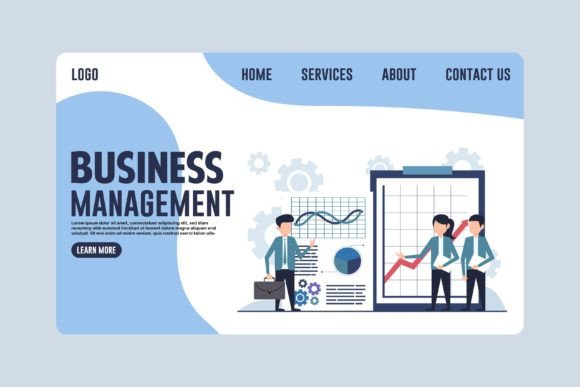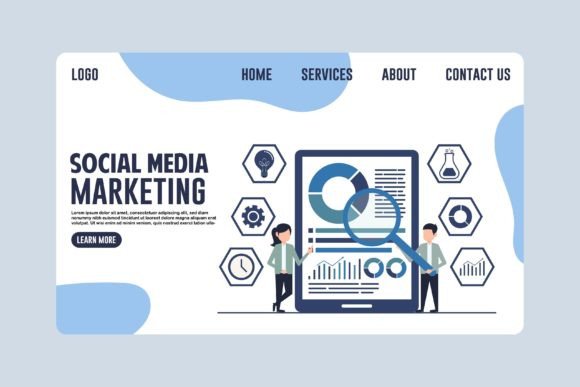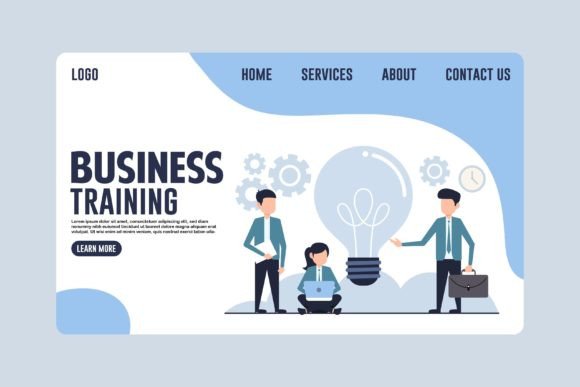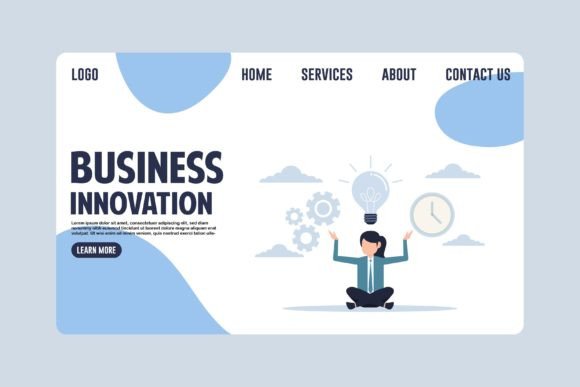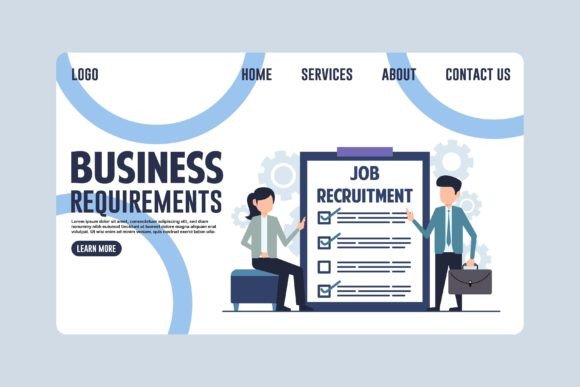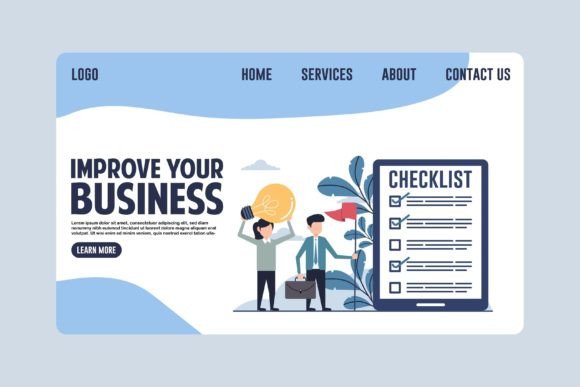
Strategic Value of Business Landing Page Design Illustration
In the crowded digital marketplace, a landing page is often the first tangible interaction a potential customer has with your brand. It is not merely a webpage; it is a strategic asset designed to convert interest into action. At the heart of high-converting pages lies the Business Landing Page Design Illustration. Unlike static stock photography or generic clip art, these custom illustrations serve as a visual language that communicates complex value propositions instantly. When executed correctly, they guide user attention, reduce cognitive load, and reinforce brand identity in ways that text alone cannot achieve.
The modern demand for these assets goes beyond simple aesthetics. Professionals and business owners require flexibility. A robust design template where every element is 100% vector ensures that the visual strategy remains intact regardless of how the asset is deployed. Whether you are scaling an image for a massive billboard banner or shrinking it for a mobile web hero section, the ability to transform, scale up or down, add or remove elements, and recolor without losing quality is not just a convenience—it is a critical operational advantage.
Defining the Strategic Role of Vector Illustrations
A Business Landing Page Design Illustration is a purpose-built graphic composition intended to support the specific conversion goals of a landing page. While traditional photography captures reality, illustration constructs a narrative. This distinction is vital for entrepreneurs and marketers who need to visualize abstract concepts such as software workflows, financial growth, or futuristic service models. By utilizing vector-based designs, you gain the ability to manipulate the visual story to fit evolving market conditions without commissioning new artwork from scratch.
The strategic utility of these illustrations lies in their adaptability. In a fast-paced business environment, messaging changes. A campaign might shift focus from "speed" to "security," requiring a visual pivot. With 100 vector source files in EPS formats, you can isolate specific components—perhaps removing a background character or changing the color palette to match a seasonal promotion—instantly. This agility allows marketing teams to test different visual hypotheses rapidly, optimizing for engagement without the lag time associated with traditional production pipelines.
Why Vector Quality Matters for Long-Term Branding
The requirement for high-resolution output is non-negotiable in professional design. Raster images degrade when scaled, leading to pixelation that undermines credibility. Vector graphics, however, are mathematically defined, ensuring crisp edges and perfect clarity at any resolution. This technical superiority translates directly into brand perception. A blurry hero image suggests negligence, while a sharp, scalable vector illustration signals precision and professionalism.
Furthermore, the inclusion of high-resolution JPGs alongside the editable EPS files provides immediate usability for quick-turnaround projects like social media banners or email headers, while the vector sources remain available for print collateral or large-format web displays. This dual-format approach supports a holistic content strategy, ensuring consistency across all touchpoints from mobile web interfaces to infographics and physical brochures.
Aligning Visuals with Business Goals and Planning
Before integrating a Business Landing Page Design Illustration into your workflow, it is essential to align the visual strategy with broader business objectives. An illustration should never be an afterthought; it must be a deliberate choice that supports the user journey. Consider the primary goal of the landing page: Is it lead generation, product sales, or event registration? The visual narrative should mirror this intent.
For instance, if the goal is to explain a complex SaaS platform, an infographic-style illustration that breaks down the process into digestible steps is far more effective than a lifestyle photo of people working at computers. The former reduces friction by clarifying the value proposition immediately. The latter requires the user to infer the connection between the image and the product. Thoughtful use of vector elements allows designers to create these explanatory visuals with ease, adding labels, arrows, or icons directly within the file structure.
Enhancing Decision-Making Through Visual Clarity
Decision-makers rely on clear information to act. A well-structured illustration acts as a cognitive shortcut, allowing visitors to understand the offering in seconds. By using vector elements that can be recolored and rearranged, you can create variations that highlight different features for different audience segments. This level of customization supports A/B testing strategies, enabling you to determine which visual cues drive the highest conversion rates.
When planning your visual assets, consider the entire ecosystem of your digital presence. A cohesive set of illustrations ensures that your branding remains consistent whether a user lands on your homepage, views a blog post, or interacts with a mobile app. The ability to edit vector files in any standard graphics software means that even non-designers on your team can make minor adjustments to keep content fresh and relevant, fostering a culture of continuous improvement.
Practical Applications and Use Cases
The versatility of a comprehensive vector library extends far beyond the initial landing page. These assets form the backbone of a multi-channel marketing strategy. Here are several practical applications where the flexibility of 100% vector design proves invaluable:
- Web Graphics and Hero Images: The primary use case involves creating impactful hero sections that capture attention immediately. Because vectors scale infinitely, these images look perfect on everything from a smartphone screen to a 4K monitor.
- Mobile Web Optimization: Mobile users have limited screen real estate. Vector illustrations can be simplified or cropped to ensure key messages remain visible without cluttering the interface.
- Banners and Ads: For paid advertising campaigns, speed is essential. You can quickly generate multiple ad variants by swapping colors or text elements within the vector file, tailoring creatives to specific demographics.
- Infographics and Data Visualization: Complex data becomes accessible when presented through custom vector icons and charts. The ability to add or remove elements allows you to update statistics without redrawing the entire graphic.
- Brand Collateral: From pitch decks to whitepapers, consistent vector illustrations reinforce brand authority and provide a polished look to all business communications.
Operational Efficiency in Content Production
From an operational standpoint, having access to 100 vector source files significantly reduces production costs and timelines. Instead of hiring external illustrators for every minor tweak, internal teams can maintain creative control. This self-sufficiency accelerates time-to-market for new products or campaigns. It also mitigates the risk of dependency on third-party vendors, ensuring that your visual assets are always available when needed.
Moreover, the ability to recolor elements without loss of quality allows for seamless adaptation to different brand guidelines or seasonal themes. A single base illustration can serve as the foundation for dozens of unique assets, maximizing the return on investment for the design resource.
Risks of Unintentional Usage and Mitigation Strategies
While the benefits of Business Landing Page Design Illustration are substantial, there are risks associated with using these assets without a clear strategic framework. One common pitfall is the "decoration trap," where illustrations are added purely for aesthetic appeal without serving a functional purpose. This can distract users from the call-to-action (CTA) and dilute the core message.
Another risk is inconsistency. If vector elements are modified haphazardly—changing styles, line weights, or color palettes arbitrarily—the result can be a disjointed visual experience that confuses the audience. To mitigate this, establish a style guide before editing the vector files. Define rules for color usage, typography integration, and composition to ensure that every modification aligns with the overall brand identity.
Avoiding Generic Outcomes
Even with high-quality templates, there is a danger of looking generic if the illustrations are not tailored to your specific niche. Simply downloading a vector pack and dropping it onto a page without customization can make your brand appear indistinguishable from competitors. To avoid this, treat the vector files as a starting point rather than a finished product. Customize the characters, settings, and props to reflect your actual industry and customer base. The power of vector editing lies in this ability to personalize; leverage it to create a unique visual voice.
Intentional Implementation for Sustainable Growth
To derive maximum value from a Business Landing Page Design Illustration template, adopt an intentional approach. Begin by auditing your current visual assets and identifying gaps in your storytelling. Determine which parts of your user journey lack visual reinforcement and select vector elements that address those specific needs.
Plan for scalability. Choose illustrations that can grow with your business. As you expand into new markets or launch new product lines, your visual system should be flexible enough to accommodate these changes without requiring a complete overhaul. The modular nature of vector graphics supports this evolution, allowing you to mix and match components to create new narratives.
Finally, measure the impact. Use analytics to track how different visual treatments affect user behavior. Does a specific illustration style increase time on page? Do certain color combinations improve click-through rates? Use these insights to refine your approach continuously. By treating your design assets as dynamic tools for experimentation rather than static decorations, you position your business for long-term success.
In conclusion, the strategic deployment of high-quality, editable vector illustrations is a powerful lever for business growth. It empowers teams to communicate more effectively, operate more efficiently, and build stronger connections with their audience. By understanding the capabilities of these tools and applying them with intention, you can create landing pages that not only look exceptional but also drive meaningful results.