Strategic Design for Landing Page Social Media Marketing: Evaluating Vector Assets
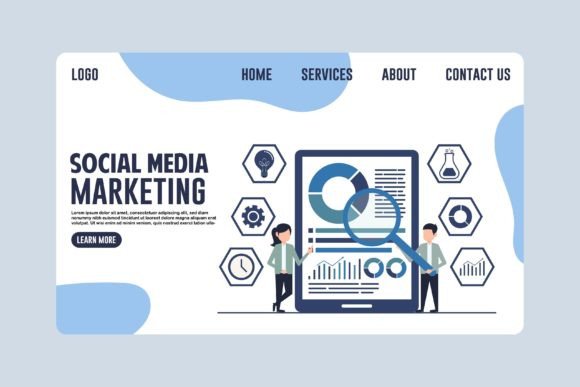
In the competitive landscape of digital advertising, the effectiveness of a campaign often hinges on the visual clarity and technical performance of its destination. Landing Page Social Media Marketing relies heavily on the immediate impact of imagery to convert traffic from platforms like Facebook, Instagram, or LinkedIn into tangible business results. Unlike standard website browsing, social media users arrive with specific intent triggered by an ad, requiring visuals that load instantly, scale perfectly across devices, and communicate value without ambiguity. This is where the choice of design assets becomes a critical decision factor for marketers and designers alike.
A robust approach to this challenge involves utilizing 100% vector-based design templates. These resources offer a distinct advantage over traditional raster graphics, particularly when the goal is to create flexible, high-quality visuals for diverse marketing channels. By understanding the mechanics of vector files and how they integrate into broader marketing strategies, professionals can make more informed decisions about their creative workflows and asset management.
The Distinctive Role of Visuals in Social Media Landing Pages
Landing Page Social Media Marketing differs significantly from general web design because it operates within a constrained attention economy. Users scrolling through a social feed are bombarded with content; the moment they click an ad, the landing page must maintain continuity with the promise made in the advertisement. If the visual style shifts drastically or the image quality degrades on a mobile screen, trust erodes immediately.
Vector graphics address these challenges by providing mathematical precision in rendering. Unlike pixel-based images (such as JPEGs or PNGs), which consist of a fixed grid of colored dots, vector files use paths defined by points, lines, and curves. This fundamental difference means that a vector illustration can be scaled up to cover a massive billboard or down to fit a tiny mobile banner without any loss of sharpness or clarity. For Landing Page Social Media Marketing, this scalability is not merely a convenience; it is a necessity for ensuring brand consistency across the fragmented ecosystem of social media placements.
Comparing Vector Assets Against Raster Alternatives
When evaluating design resources for marketing campaigns, the primary comparison lies between vector formats (like EPS or SVG) and raster formats (like JPG or PNG). Each has its place, but the requirements of social media marketing often favor the former for hero images, infographics, and illustrative elements.
- Scalability and Resolution: Raster images have a fixed resolution. Enlarging them beyond their original dimensions results in pixelation and blurriness. In contrast, vector files remain crisp at any size. This allows a single master file to serve multiple purposes, from a desktop hero section to a mobile app icon.
- File Size and Load Speed: While high-resolution raster images can become heavy and slow down page loading times, vector files are often lighter in weight, provided they do not contain excessive data. Faster load times are crucial for Landing Page Social Media Marketing, as even a one-second delay can significantly reduce conversion rates.
- Editability and Flexibility: One of the most significant tradeoffs with raster images is the difficulty in editing specific elements once they are flattened. With vector sources, every element remains distinct. Designers can transform, recolor, remove, or add components without starting from scratch. This flexibility is invaluable when A/B testing different color schemes or headlines for social ads.
Evaluating the Practical Benefits of Vector Source Files
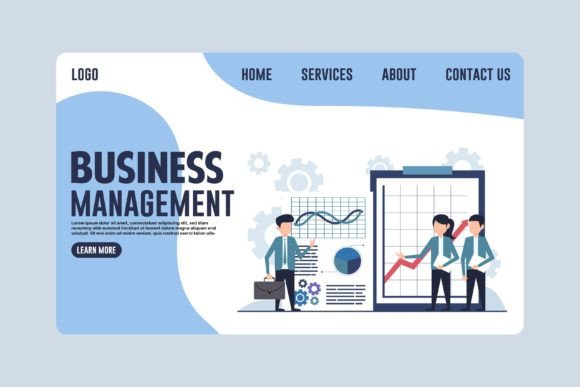
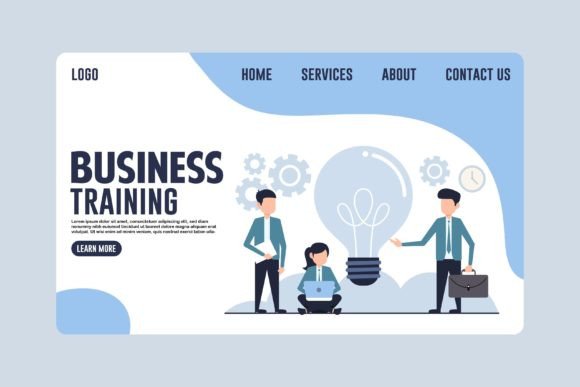
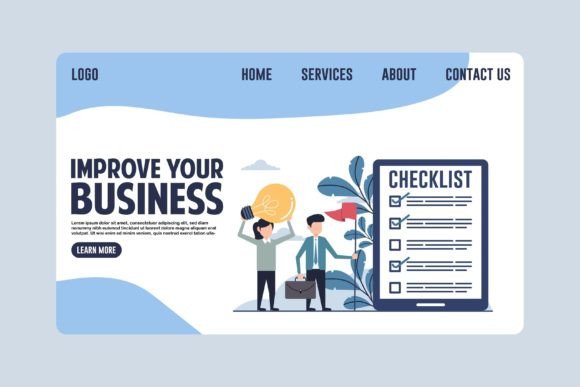
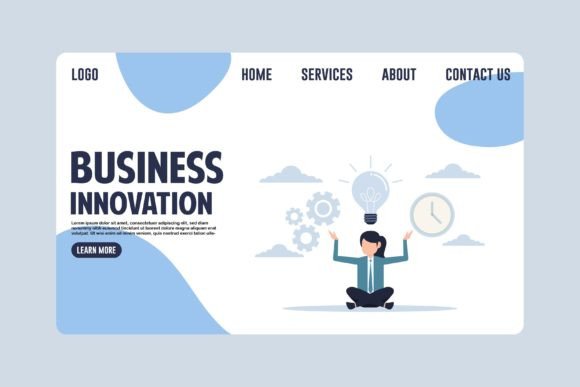
Access to a comprehensive library of vector source files changes the dynamic of project execution. When a design template includes 100 vector source files in EPS format, along with high-resolution JPG previews, it provides a dual-layered resource. The EPS files serve as the editable master, while the JPGs offer quick visualization. This combination supports a workflow that balances speed with customization.
For teams engaged in Landing Page Social Media Marketing, the ability to modify assets directly is a major efficiency driver. Consider a scenario where a marketing team needs to adapt a single campaign for three different demographics. With raster assets, this might require creating entirely new compositions or relying on stock photography that may not align perfectly with the brand voice. With vector files, the team can simply adjust the color palette to match demographic preferences, swap out text labels, or rearrange infographic elements to highlight different features. This level of control ensures that the final output feels bespoke rather than generic.
Key Use Cases for Vector-Based Marketing Designs
The versatility of vector graphics makes them suitable for a wide array of applications within the marketing funnel. Understanding where to deploy these assets can maximize their return on investment.
- Hero Images and Banners: The top section of a landing page is prime real estate. Vector illustrations here ensure that the message is legible on all screen sizes, from large monitors to smartphones.
- Infographics: Social media users often consume information visually. Vector-based infographics allow for clear data representation that remains sharp when shared or embedded in posts.
- Mobile Web Graphics: As mobile traffic continues to dominate, the need for lightweight yet scalable graphics increases. Vectors ensure that mobile experiences are smooth and visually appealing.
- Web Graphics and Icons: Consistent iconography helps guide user behavior. Vector icons can be resized to fit various UI elements without compromising the interface's aesthetic.
Tradeoffs and Decision Factors for Marketers
While vector assets offer compelling advantages, they are not a universal solution for every design need. A balanced evaluation requires acknowledging where raster images still hold value. For instance, if a campaign relies heavily on photorealistic imagery—such as showcasing a physical product in a natural setting—a photograph (raster) will almost always be superior to a vector illustration. No amount of scaling can replicate the texture and depth of a high-quality photograph.
Furthermore, the complexity of vector editing requires a certain level of technical proficiency. While the files are editable in any vector graphics software, making meaningful changes requires familiarity with tools like Adobe Illustrator, CorelDRAW, or Inkscape. Teams without dedicated design staff may find the learning curve steep compared to simply dropping a pre-made JPG into a layout. However, for organizations investing in long-term branding and multi-channel campaigns, the initial time investment in mastering these tools pays dividends in flexibility and cost savings.
Another consideration is the nature of the content. Abstract concepts, technology interfaces, and stylized characters translate exceptionally well into vectors. Conversely, organic textures, complex lighting effects, and realistic human portraits are better suited for raster formats. In Landing Page Social Media Marketing, the most effective strategy often involves a hybrid approach: using vector graphics for layout, typography, and illustrative elements, while integrating high-resolution photos only where realism is essential.
When to Choose Vector Templates Over Other Options
Deciding whether to invest in a collection of vector source files depends on specific project goals and constraints. Here are scenarios where this approach is the right choice:
- Multi-Platform Campaigns: If your marketing strategy involves running ads across various devices and screen sizes, vectors ensure consistent quality everywhere.
- Brand Customization Needs: When you need to frequently update colors, logos, or text to align with seasonal promotions or brand guidelines, editable vector files save significant time.
- Long-Term Asset Management: For companies looking to build a library of reusable assets, vector files are future-proof. They can be updated years later without needing to recreate the artwork.
- Print and Digital Integration: If your campaign extends beyond the web into print materials like brochures or posters, vector files provide the necessary resolution for high-quality printing.
Conversely, if the project is a one-off promotional post with no need for resizing or editing, or if the visual requirement is strictly photographic, purchasing a full vector suite may be unnecessary overhead. In such cases, high-quality stock photography or simple raster templates might suffice.
Optimizing Workflow with High-Resolution Resources
The inclusion of high-resolution JPG files alongside the vector sources offers a practical middle ground. These JPGs allow stakeholders to preview designs quickly without opening heavy vector software. This facilitates faster approval cycles and easier sharing with non-design team members who may not have the necessary software installed. However, it is crucial to remember that the JPG is a derivative of the vector file. For final production, especially for Landing Page Social Media Marketing where precision matters, the original EPS files should always be used to generate the final assets.
By leveraging the strengths of both formats, teams can streamline their workflow. The vector files handle the heavy lifting of customization and scaling, while the JPGs serve as efficient communication tools during the planning phase. This dual-format availability ensures that the design process remains agile, allowing marketers to respond quickly to changing trends or feedback without sacrificing visual quality.
Conclusion on Strategic Asset Selection
Ultimately, the success of Landing Page Social Media Marketing depends on the alignment between message, medium, and visual execution. Choosing the right design resources is a strategic decision that impacts everything from load times to conversion rates. While raster images have their place, the flexibility, scalability, and editability of 100% vector design templates offer a distinct advantage for modern, multi-channel marketing efforts.
For professionals aged 20 to 50 who are navigating the complexities of digital advertising, the ability to manipulate high-quality vector assets provides a competitive edge. It empowers teams to create tailored, responsive, and visually consistent experiences that resonate with audiences across all devices. By weighing the tradeoffs between customization needs, technical capabilities, and project scope, organizations can determine whether a comprehensive vector package is the optimal investment for their specific marketing objectives. In an era where visual attention is scarce, the precision and adaptability of vector graphics stand out as a reliable foundation for effective digital storytelling.