Securing Creative Alliances: The Intersection of Partnership Agreements and Scalable Vector Assets
In the modern digital economy, the line between legal strategy and creative execution is increasingly blurred. For professionals ranging from freelancers to enterprise C-suite executives, success often hinges on two distinct yet interconnected pillars: robust contractual frameworks and high-quality, adaptable visual assets. While a Webpage Business Partnership Agreement defines the terms of collaboration, the tools used to execute that collaboration—such as 100% vector design templates—determine the scalability and longevity of the project. Understanding how these elements work in tandem is essential for navigating today's fast-paced market.
The Foundation of Digital Collaboration: Understanding the Webpage Business Partnership Agreement
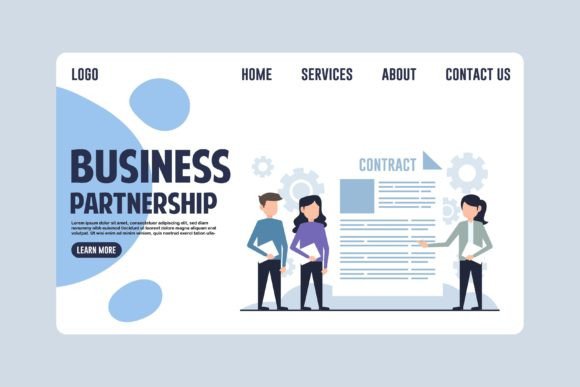
A Webpage Business Partnership Agreement is more than a standard contract; it is the blueprint for a strategic alliance focused on digital presence. Unlike traditional partnership agreements that might cover general business operations, this specific instrument addresses the unique nuances of web development, content creation, and online marketing collaborations. It outlines the responsibilities of each party regarding website architecture, content ownership, traffic generation, and revenue sharing models specific to digital platforms.
As the internet evolves into the primary marketplace for goods and services, the need for clarity in these partnerships has never been greater. When two entities decide to co-create a landing page, a mobile web interface, or a comprehensive e-commerce platform, they are entering a complex environment where intellectual property rights, data privacy, and technical maintenance must be clearly defined. A well-crafted agreement ensures that both parties understand their roles, mitigating the risk of disputes over who owns the source code, the design files, or the user data generated by the site.
This document serves as a safeguard against the volatility of the digital landscape. It establishes protocols for what happens if a partner withdraws, how profits are distributed based on performance metrics, and how decisions regarding site updates are made. In an era where a single webpage can generate millions in revenue, the absence of such an agreement can lead to catastrophic financial and reputational damage.
The Power of 100% Vector Design: Flexibility in a Dynamic Market
While the legal framework secures the business relationship, the quality of the deliverables determines the success of the venture. This is where the significance of using 100% vector design templates becomes apparent. In the context of web graphics, mobile interfaces, and infographics, vector files offer a level of flexibility that raster images simply cannot match. Because every element in a vector file is mathematically defined rather than pixel-based, these assets can be transformed, scaled up or down, and recolored without any loss of quality.
For entrepreneurs and marketers, this capability is transformative. Consider a scenario where a partnership involves creating a brand identity for a new product launch. The team needs a hero image for a desktop website, a banner for a mobile app, and a small icon for social media. With raster graphics, resizing a large image for a small icon often results in blurriness or pixelation. However, with vector sources files in EPS formats, the same asset can be resized infinitely to fit any screen resolution while maintaining crisp edges and perfect clarity.
This adaptability aligns perfectly with the current trend toward responsive design and multi-platform deployment. As consumers switch seamlessly between smartphones, tablets, and desktops, businesses require assets that look flawless across all devices. The ability to easily edit vector files in any vector graphics software allows designers to quickly iterate on designs, removing or adding elements to suit different marketing campaigns without starting from scratch. This efficiency not only saves time but also reduces costs, making it a critical component of any modern digital strategy.
Bridging the Gap Between Legal Rights and Creative Assets
The connection between a Webpage Business Partnership Agreement and the delivery of vector assets is profound. One of the most common points of contention in creative partnerships is the ownership and licensing of source files. When a designer delivers a final JPG image, the client receives the output but not the means to modify it. However, when the deliverable includes 100 vector source files, the value proposition shifts dramatically.
A forward-looking partnership agreement should explicitly state the transfer of these editable assets. It should clarify that the client will receive not just the high-resolution JPGs for immediate use, but the underlying EPS files that allow for future customization. This distinction is vital for long-term business health. If a company decides to rebrand six months after the launch, having access to the original vector layers means they can update colors, typography, and layout without needing to hire a designer again. This self-sufficiency is a key driver of value in the freelance and agency sectors.
Furthermore, the inclusion of diverse file types in the agreement reflects a sophisticated understanding of workflow needs. A typical package might include:
- 100 Vector source files in EPS formats: For professional editing and archival purposes.
- High-resolution JPG files: For immediate implementation in web and print contexts.
- Editable text layers: Ensuring that headlines and body copy can be updated instantly.
By codifying these deliverables within the partnership agreement, both parties ensure transparency. The creator knows exactly what they are obligated to provide, and the client knows exactly what they are purchasing. This clarity fosters trust and sets the stage for a productive, long-term relationship.
Market Trends Driving the Demand for Adaptability
Why are professionals paying so much attention to the combination of rigorous legal agreements and flexible vector assets? The answer lies in the shifting preferences of the consumer and the evolving nature of technology. Today's digital environment is characterized by rapid change. Marketing trends shift weekly, and new device form factors emerge constantly. Businesses can no longer afford static, rigid assets that become obsolete the moment a new phone model is released.
The demand for infographics, hero images, and landing pages that can be quickly adapted to new trends is at an all-time high. Marketers need to A/B test different visuals, change color schemes to match seasonal promotions, or resize banners for emerging social media platforms. The ability to do this efficiently relies entirely on the quality of the source files. Consequently, clients are increasingly demanding access to the raw vector data as part of their service packages.
This trend is also reshaping the workflows of freelancers and agencies. The expectation is no longer just "design a logo" or "build a website." The expectation is "create a scalable ecosystem of assets that we can manage internally." This shift requires a new approach to contracting. A Webpage Business Partnership Agreement must now account for the ongoing maintenance and modification of these assets, ensuring that the legal framework supports the technical reality of the work.
Practical Applications Across Industries
The versatility of 100% vector design extends far beyond simple web graphics. In the realm of mobile web development, where screen real estate is premium, the ability to scale icons and illustrations without losing detail is crucial. For banner advertising, where dimensions vary wildly across different ad networks, vector files allow for instant resizing. Even in corporate presentations and print collateral, the same master file can serve multiple purposes.
Consider a startup launching a SaaS product. They enter a partnership with a design firm. The agreement stipulates that the firm will deliver a suite of vector illustrations representing the software's features. These illustrations are used on the homepage, in email campaigns, and in investor pitch decks. Six months later, the startup pivots its branding slightly. Because they own the vector files, they can update the color palette and tweak the shapes of the illustrations in-house, saving thousands of dollars in redesign fees. This scenario highlights why the intersection of legal clarity and asset flexibility is so powerful.
The Future of Professional Partnerships
Looking ahead, the integration of detailed legal frameworks with high-fidelity, editable digital assets will become the standard for professional engagement. As artificial intelligence and automation begin to handle routine tasks, the human value in design and law will shift toward strategy, customization, and relationship management. A Webpage Business Partnership Agreement that fails to address the specifics of digital asset ownership will likely fall short of protecting the interests of either party.
Similarly, designers who continue to deliver only static, non-editable files may find themselves less competitive in a market that demands agility. The ability to provide 100 vector source files that can be transformed, scaled, and recolored without quality loss is not just a technical feature; it is a business enabler. It empowers clients to take control of their brand narrative and respond swiftly to market changes.
Ultimately, the synergy between a solid legal foundation and superior technical deliverables creates a resilient business model. Whether you are a freelancer negotiating your first major contract or an entrepreneur building a global brand, recognizing the importance of both the agreement and the assets is key. By ensuring that your partnerships are backed by clear terms and supported by versatile, high-quality vector resources, you position yourself for sustainable growth in an ever-evolving digital world.
The path forward requires a holistic view of business operations. It demands that we treat our contracts and our creative tools with equal seriousness. When done correctly, the result is a seamless workflow where legal security meets creative freedom, allowing professionals to focus on what matters most: innovation and impact.