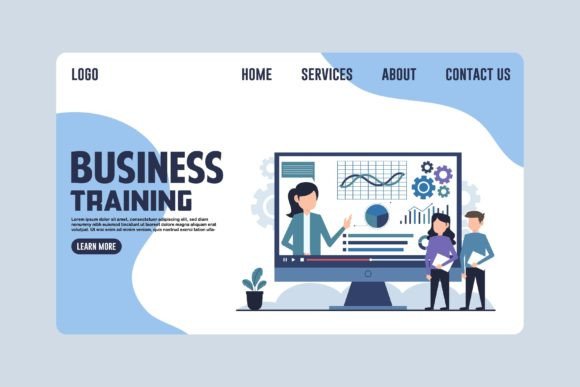
Revolutionizing Corporate Learning with Modern and Interactive Business Training
In the rapidly evolving landscape of professional development, the days of static slide decks and passive lectures are fading. Today's workforce demands engagement, relevance, and flexibility. This shift has given rise to Modern and Interactive Business Training, a dynamic approach that leverages technology and design to create immersive learning experiences. At the heart of this transformation lies the power of high-quality visual assets, specifically scalable vector graphics that allow trainers and designers to craft compelling educational materials without compromising on quality or adaptability.
The Shift from Passive to Active Learning Environments
Traditional training methods often struggle to retain attention. When employees sit through hours of unengaging content, knowledge retention plummets. Modern and Interactive Business Training flips this script by placing the learner at the center of the experience. It utilizes gamification, branching scenarios, real-time feedback loops, and collaborative tools to make learning an active process rather than a passive obligation.
This approach is not just about making training "fun"; it is about cognitive efficiency. When learners interact with material—clicking, dragging, solving problems, and exploring visuals—their brains form stronger neural connections. The result is faster skill acquisition and better application of concepts in real-world scenarios. To support this interactivity, the underlying design infrastructure must be robust, flexible, and visually stunning.
The Critical Role of Vector Graphics in Training Design
One of the unsung heroes of effective training design is the use of vector-based illustrations. Unlike raster images (such as JPEGs or PNGs) which lose quality when resized, vector graphics are mathematically defined shapes. This means every element in a Modern and Interactive Business Training module can be scaled up for a massive conference screen or down for a mobile app interface without any loss of clarity or resolution.
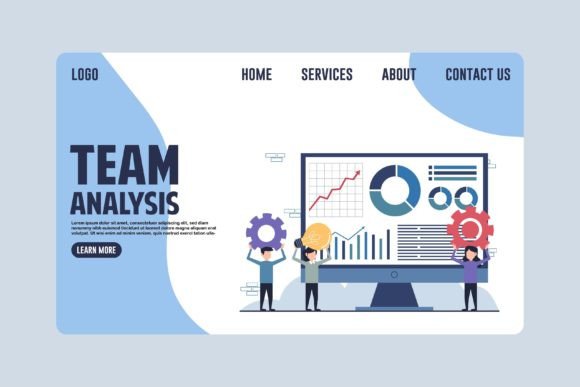
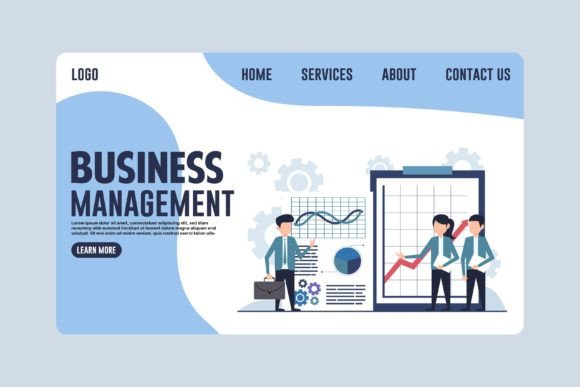
Designers and instructional developers rely on these assets to build cohesive visual languages. Whether you are creating a hero image for a landing page, an infographic for a complex data set, or icons for a mobile web interface, vector files provide the necessary versatility. Because these elements are 100% vector, you can easily edit them in any standard vector graphics software. You can transform shapes, scale elements up or down, add or remove specific components, change text, and recolor entire palettes to match your brand identity instantly.
Empowering Designers with Scalable Assets
The flexibility of vector formats is particularly crucial in the context of corporate training, where branding consistency is paramount. A single training campaign might need to be deployed across multiple platforms: a desktop Learning Management System (LMS), a mobile-responsive web portal, printed handouts, and digital banners for internal communication channels.
With a comprehensive library of vector source files, typically provided in EPS formats, teams gain immense creative freedom. Imagine needing to update a training graphic to reflect a new company logo or a seasonal color scheme. In the past, this might have required hiring a designer to redraw everything from scratch. Today, you can simply open the file, adjust the color codes, swap out the text, and export a high-resolution JPG or keep the editable EPS file for future use. This agility significantly reduces production time and costs.
Applications Across Digital Touchpoints
The utility of these vector assets extends far beyond simple slides. They are integral to various project types that define the modern digital ecosystem:
- Web Graphics and Mobile Web: As more training moves to mobile devices, crisp, lightweight vector graphics ensure fast loading times and perfect rendering on all screen sizes.
- Landing Pages and Hero Images: High-impact visuals are essential for converting visitors into enrolled students. Vector art allows for bold, clean hero sections that capture attention immediately.
- Banners and Advertisements: Internal marketing for training programs requires eye-catching banners that look professional on both email clients and intranet dashboards.
- Infographics: Complex business processes are best explained through clear, scalable infographics that can be zoomed in on without pixelation.
These applications demonstrate how Modern and Interactive Business Training relies heavily on versatile design resources to maintain a polished, professional appearance across all user touchpoints.
Integrating Interactivity into the Curriculum
While the visual assets provide the canvas, the interactivity provides the lifeblood of the training. Effective programs now incorporate decision-making simulations where users face realistic business dilemmas. For example, a sales training module might present a scenario where the user must choose between three different negotiation tactics. Each choice leads to a different outcome, providing immediate feedback on their decision-making skills.
To visualize these scenarios effectively, designers use the aforementioned vector libraries. If a scenario involves a manufacturing floor, the background and machinery can be drawn in vector, allowing the trainer to animate parts moving or changing status based on user input. If the training shifts to a service environment, the same asset library can be recolored and reconfigured to depict a retail store or an office setting. This modularity ensures that the training remains fresh and adaptable to various industries.
Benefits of a Modular Design Approach
Adopting a modular approach to training design offers several strategic advantages. First, it accelerates the development cycle. Instead of creating unique graphics for every single slide or screen, teams can mix and match elements from a central repository of 100+ vector source files. Second, it ensures visual consistency. When every icon, character, and background element comes from the same vector family, the final product feels unified and professional.
Furthermore, this approach supports localization efforts. Text boxes within vector files can be easily expanded or contracted to accommodate different languages without breaking the layout. This is vital for global corporations rolling out Modern and Interactive Business Training programs across international offices.
Practical Considerations for Implementation
When organizations decide to upgrade their training infrastructure, they must consider both the pedagogical strategy and the technical execution. Choosing the right tools is only half the battle; understanding how to leverage them is key. Teams should prioritize assets that offer full editability. Having access to high-resolution JPGs is useful for quick previews or print proofs, but the true value lies in the editable EPS files.
Consider the workflow of a typical training project. An instructional designer outlines the learning objectives, a content writer drafts the scripts, and a visual designer brings it to life. With a robust set of vector resources, the visual designer spends less time drawing basic shapes and more time focusing on composition, storytelling, and user experience. They can focus on how the visuals guide the learner's eye and reinforce the message, rather than struggling with low-resolution assets that blur upon export.
Future-Proofing Your Training Materials
Investing in high-quality, editable vector assets is an investment in longevity. Technology trends change, but the need for clear, engaging communication remains constant. By building your training modules on a foundation of scalable, editable graphics, you ensure that your materials can evolve alongside your business. You can easily update a diagram to reflect a new software interface or replace a stock illustration with a custom character that represents your team culture.
This adaptability is the hallmark of Modern and Interactive Business Training. It acknowledges that business needs are fluid and that training must be equally agile. Whether you are launching a new product line, implementing a compliance protocol, or upskilling a remote workforce, the ability to quickly iterate on your visual content is a significant competitive advantage.
Maximizing Engagement Through Visual Storytelling
Ultimately, the goal of any training program is behavior change. Visual storytelling is one of the most powerful tools to achieve this. Humans are wired to respond to images and narratives. When combined with interactive elements, these stories become memorable experiences. A well-designed vector illustration can simplify a complex concept, such as a supply chain logistics flow or a cybersecurity threat model, making it accessible to non-experts.
By utilizing a diverse collection of vector sources, trainers can create rich, detailed environments that immerse learners in the subject matter. From abstract concepts represented by clean geometric shapes to realistic depictions of workplace interactions, the possibilities are endless. The ability to recolor, resize, and modify these elements ensures that the story told is always aligned with the specific needs of the audience.
As we move forward, the integration of advanced design capabilities with interactive pedagogy will continue to redefine what is possible in corporate education. Organizations that embrace Modern and Interactive Business Training, supported by flexible, high-quality vector assets, will find themselves better equipped to develop skilled, engaged, and adaptable workforces ready to tackle the challenges of tomorrow.