Unique Banners Template: A Practical Evaluation for Business Design
In the competitive landscape of digital marketing, visual communication serves as a primary driver for engagement. For businesses seeking to establish a distinct online presence, the choice of design assets is critical. The Unique Banners Template has emerged as a significant resource for companies aiming to streamline their creative workflow while maintaining high visual standards. These templates are not merely static images; they are foundational design structures that allow for extensive customization without compromising technical integrity. Understanding the capabilities and limitations of these tools is essential for anyone evaluating whether they align with specific business goals.
Defining the Unique Banners Template
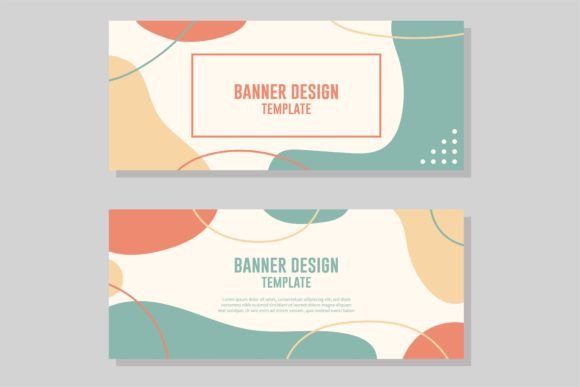
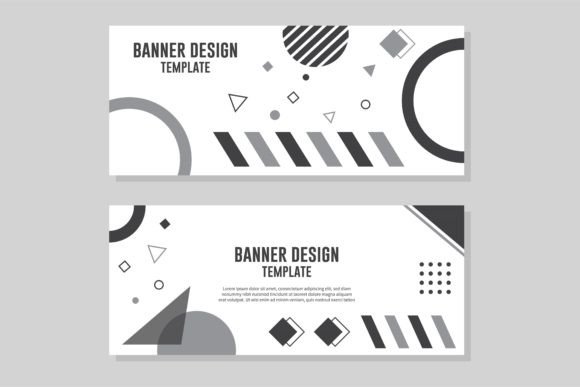
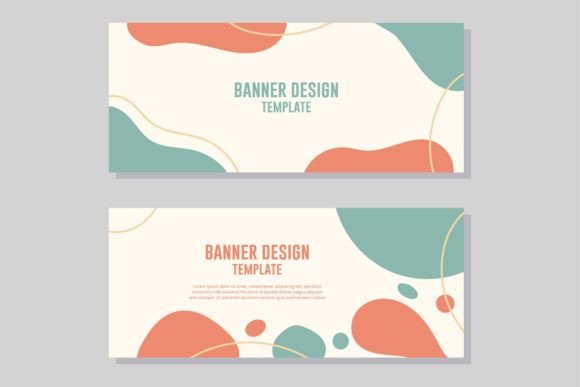
A Unique Banners Template refers to a pre-designed web banner layout created in vector format. Unlike raster-based images, which rely on pixels and degrade when resized, vector graphics utilize mathematical equations to define shapes, lines, and curves. This fundamental difference allows users to manipulate the design extensively. When you acquire a web banners design template for your company, you gain access to source files compatible with standard vector graphics software such as Adobe Illustrator, CorelDRAW, or Inkscape.
The core value proposition lies in the editability of these files. Users can transform elements, scale designs up or down to fit any required dimension, add or remove specific graphical components, modify text content, and recolor entire sections. Crucially, all these actions occur without losing quality. This ensures that a banner designed for a small social media ad can be scaled up for a large website header while retaining crisp edges and clear typography.
Why Businesses Consider Vector-Based Templates
Several factors drive organizations to explore Unique Banners Template solutions rather than commissioning custom designs from scratch or using rigid image editors. The primary motivation is often efficiency. Creating a professional-grade banner from a blank canvas requires significant time and specialized skill. Templates provide a structured starting point that adheres to established design principles, reducing the learning curve for internal teams.
Furthermore, the flexibility inherent in vector formats addresses a common pain point in digital advertising: multi-channel deployment. Marketing campaigns often require the same visual concept to appear across various platforms, each with different size requirements. With a vector-based template, a designer can adjust the canvas size instantly. Whether the need is for a leaderboard, a skyscraper, or a mobile app interstitial, the underlying geometry remains intact. This adaptability reduces the need to create multiple versions of an asset manually.
Key Benefits of the Format
- Scalability: The ability to resize graphics infinitely without pixelation ensures consistency across devices ranging from smartphones to large desktop monitors.
- Customization Depth: Users can alter colors to match brand guidelines, swap out icons, and restructure layouts to emphasize different calls to action.
- Cost-Effectiveness: Compared to hiring a graphic designer for every single campaign, purchasing or utilizing a template library offers a more economical solution for ongoing needs.
- Speed to Market: Pre-built structures allow for rapid iteration, enabling businesses to respond quickly to market trends or time-sensitive promotions.
Tradeoffs and Considerations
While the advantages are substantial, a balanced evaluation requires acknowledging potential tradeoffs. The most significant consideration is the requirement for specific software. To fully leverage the editable nature of a Unique Banners Template, users must have access to vector graphics software. While free alternatives exist, many professional workflows rely on paid subscriptions. If a team lacks proficiency in these tools, the initial setup may involve a learning period.
Additionally, there is the risk of homogenization. Because templates are widely available, there is a possibility that competitors might use similar base designs. Without sufficient customization—such as altering color palettes, typography, and layout elements—a banner may fail to stand out. The "unique" aspect of the template relies heavily on the user's ability to inject their own brand identity into the structure. Simply changing the text is rarely enough to ensure distinctiveness in a crowded digital space.
Situations Where Templates Are a Strong Fit
The Unique Banners Template is particularly well-suited for specific operational contexts. Small to medium-sized businesses with limited design resources often find these templates invaluable. They provide a professional look without the overhead of a full-time creative department. Similarly, marketing agencies managing multiple clients can use templates as a foundation, customizing them rapidly for different brands to meet tight deadlines.
These templates are also ideal for A/B testing scenarios. When marketers need to test different headlines, colors, or imagery to determine what converts best, the ability to quickly generate variations is crucial. The non-destructive editing capabilities of vector files make it easy to create dozens of iterations in a short timeframe. Furthermore, industries that undergo frequent rebranding or seasonal campaigns benefit from the ease of recoloring and updating elements within the existing framework.
When Alternatives May Be Worth Considering
Despite their utility, Unique Banners Template solutions are not a universal solution. Situations requiring highly complex, bespoke illustrations or intricate animations may necessitate custom design work. If a campaign relies on a unique artistic style that cannot be achieved through standard vector shapes and stock elements, a template might feel restrictive.
Moreover, if the target audience expects a level of novelty that templates cannot provide, investing in original art may yield better results. For example, luxury brands or niche markets often prioritize exclusivity in their visual identity. In these cases, the generic feel of a template, even when customized, could undermine the brand's premium positioning. Additionally, if a team possesses no experience with vector software and cannot dedicate time to learning, a drag-and-drop raster editor or a dedicated design service might be a more practical alternative.
Practical Decision-Making Insights
To determine if a web banners design template aligns with your organizational needs, consider the following criteria. First, assess your team's technical proficiency. Do you have access to vector software, and does someone know how to use it? If the answer is no, the cost of training or software acquisition should be factored into your decision.
Second, evaluate your volume of output. If you produce a high volume of banners regularly, the efficiency gains from templates will likely outweigh the costs. Conversely, if you only need one or two banners per year, the investment in templates may not be justified compared to a one-off design fee.
Finally, review the level of customization required. Examine the template's layer structure and component breakdown. Can you easily replace the imagery? Is the typography flexible? Ensure that the template allows for the degree of modification necessary to maintain your brand's voice. By carefully weighing these factors, businesses can decide whether the Unique Banners Template serves as a strategic asset or if alternative approaches better suit their specific objectives.
In conclusion, the Unique Banners Template offers a robust solution for businesses prioritizing flexibility, scalability, and efficiency in their visual communications. By understanding both its capabilities and its constraints, organizations can make informed decisions that enhance their digital presence while optimizing their resource allocation.